Tallahassee is home to the one of the largest electromagnetic field labs in the world. I didn’t realize that until today when I toured the National High Magnetic Field Laboratory.
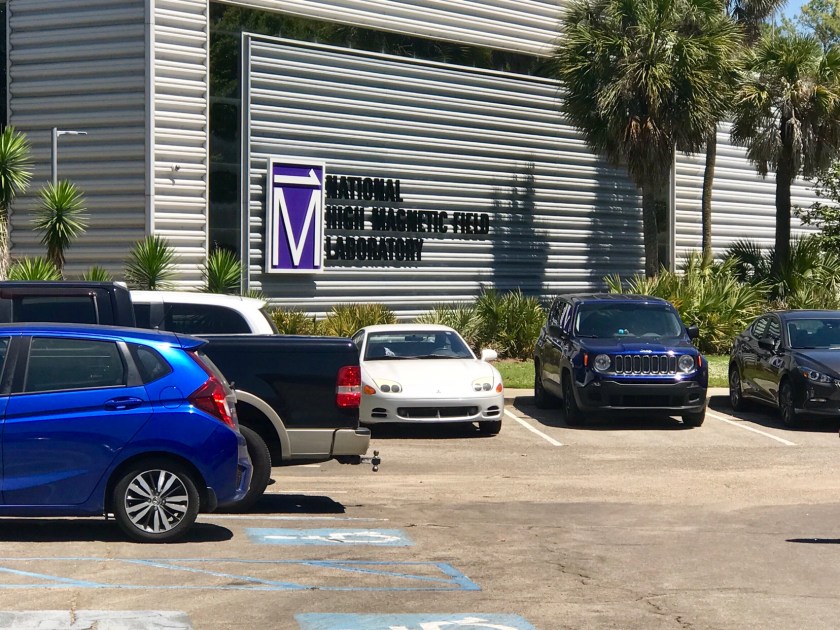
I was supposed to have met a member of the Tallahassee Women’s Social Meetup Group for the tour, but she didn’t make the trek out to the lab. There were plenty of others signed up for the tour, though, so I wasn’t the only visitor.
The MagLab was once located on the campus of M.I.T., until a group of researchers from Florida State University in Tallahassee joined forces with researchers from the University of Florida, and Los Alamos National Laboratory to make a successful bid for the facility. Now researchers from all over the world come to Tallahassee to conduct cutting-edge research.
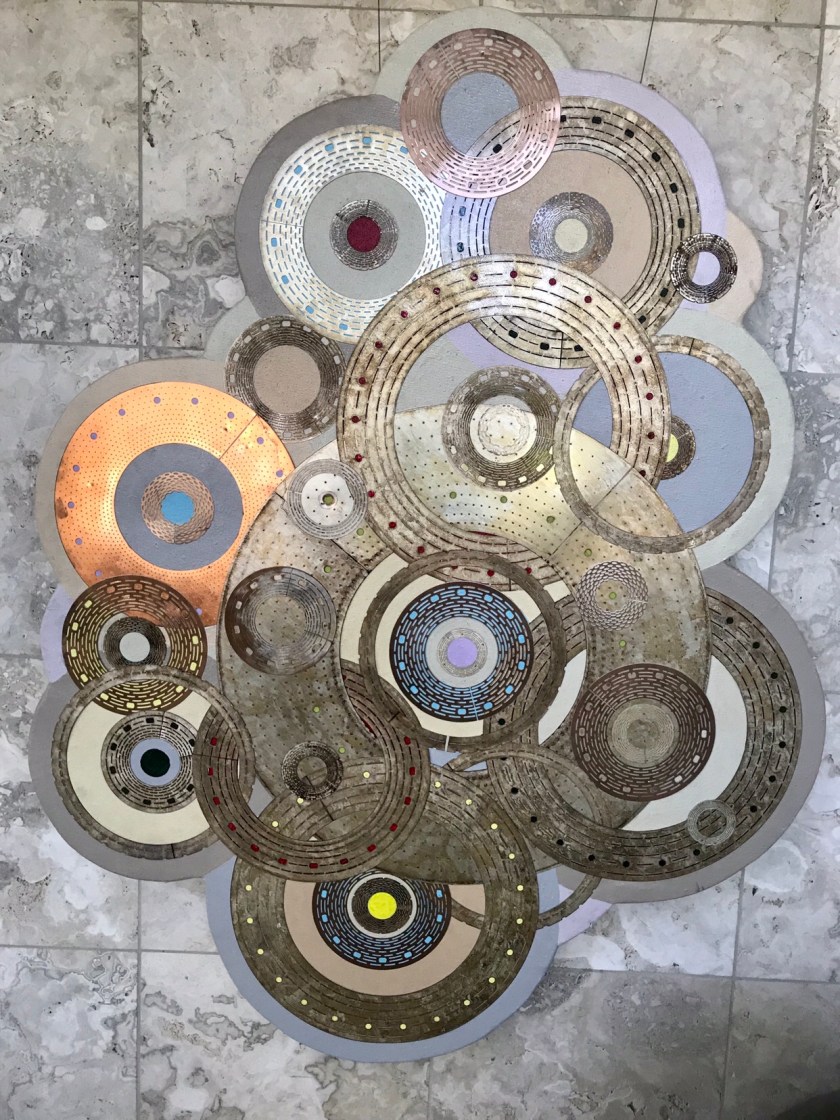
Below: This decorative piece made up of magnet components is displayed in the lobby. I tried to figure out how to smuggle it out, but my purse isn’t large enough. It’s beautiful!
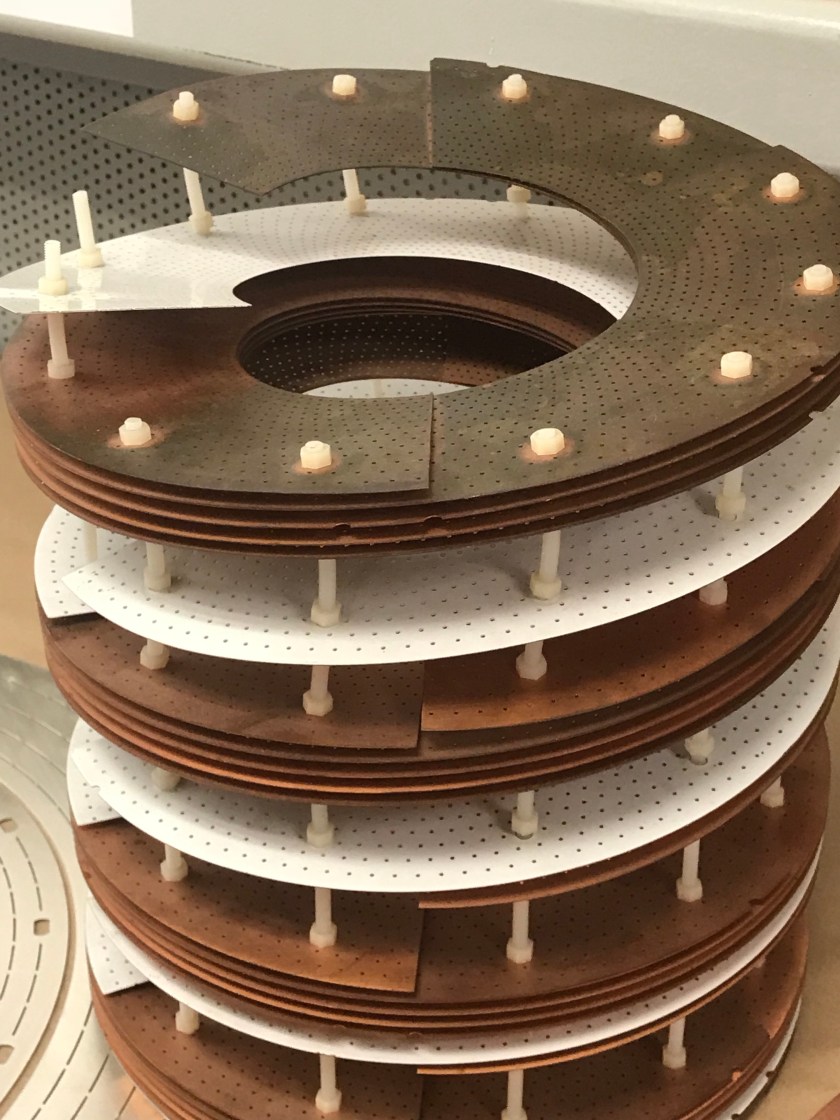
Below is a set of stacked magnets. If you imagined large horseshoe-shaped magnets, join the club. These are all discs, that when stacked, form a helix-type structure.
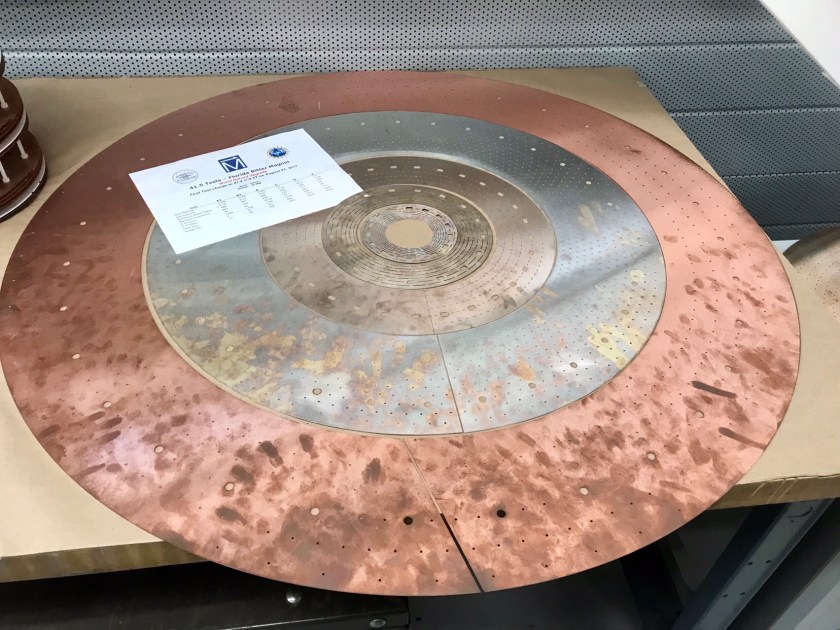
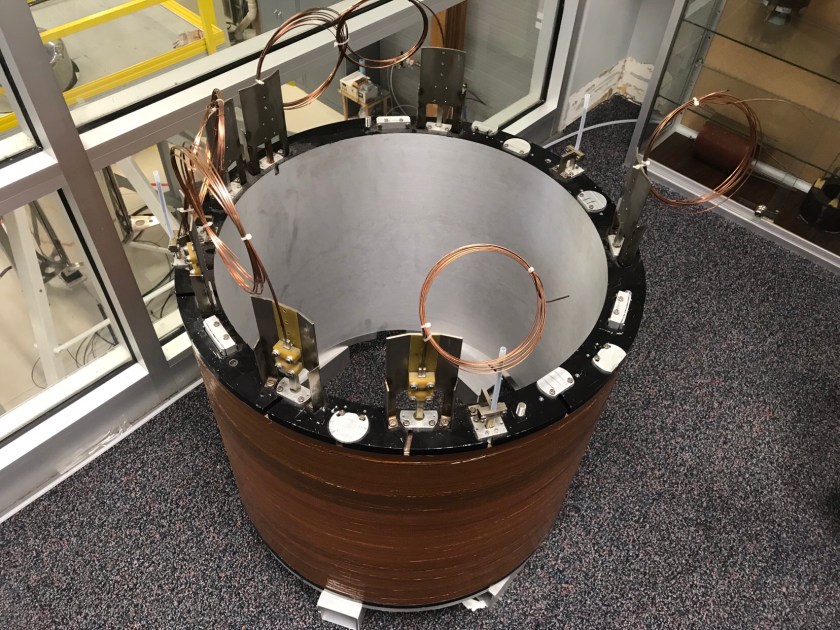
Below: The outer ring is a magnet, while the silver colored disc is a cooling mechanism. Tiny slots cut into the cooling disc allow de-ionized water to flow through and around the magnets. Because electricity powers the magnets, it’s necessary for the water to be de-ionized otherwise researchers’ findings would be shocking–and not in a good way.
Below is one of the lab cells where researchers from all over the world test out their theories using magnets. That large robot-looking thing beneath the yellow guardrail is the magnet for this cell which is in the process of being set up for a group of researchers.
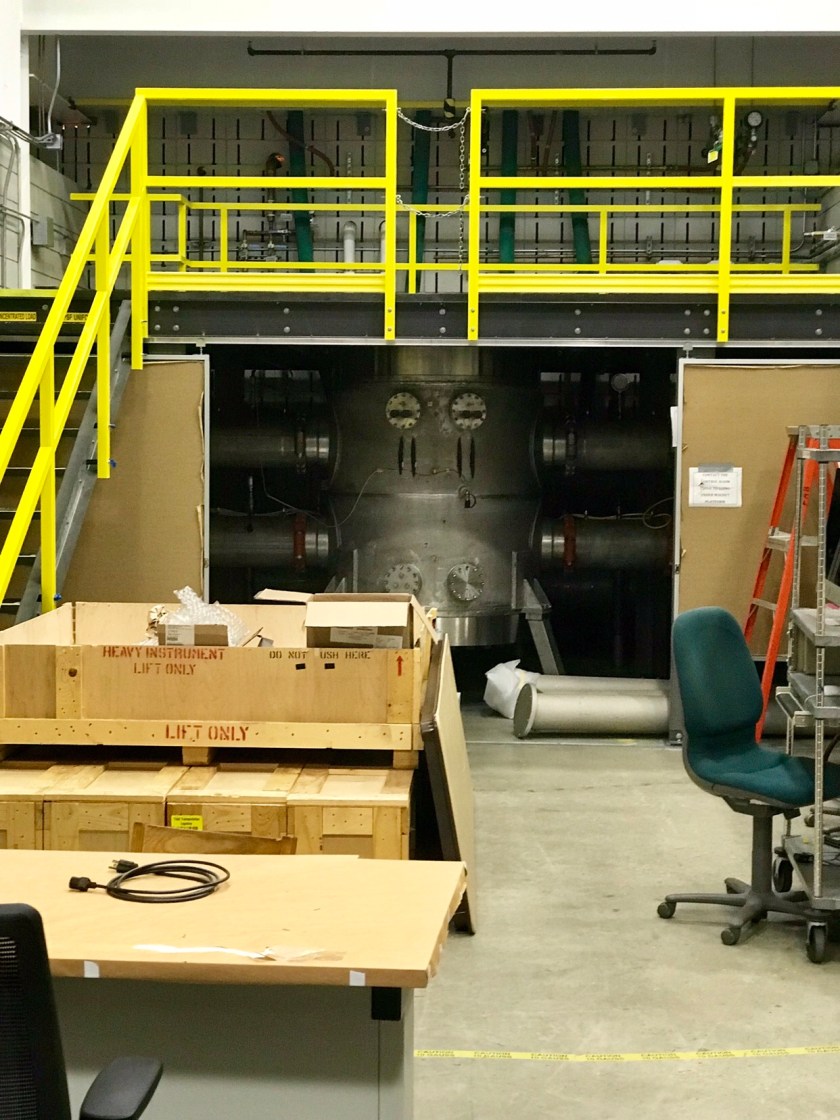
The magnets are used to study energy and the environment, the foundational science of protein and disease molecules, and a vast array of other subjects. Recently researchers using the lab have discovered connections between the way sodium impacts and interacts with malignant tumors and are looking for ways to put that knowledge into practical applications.

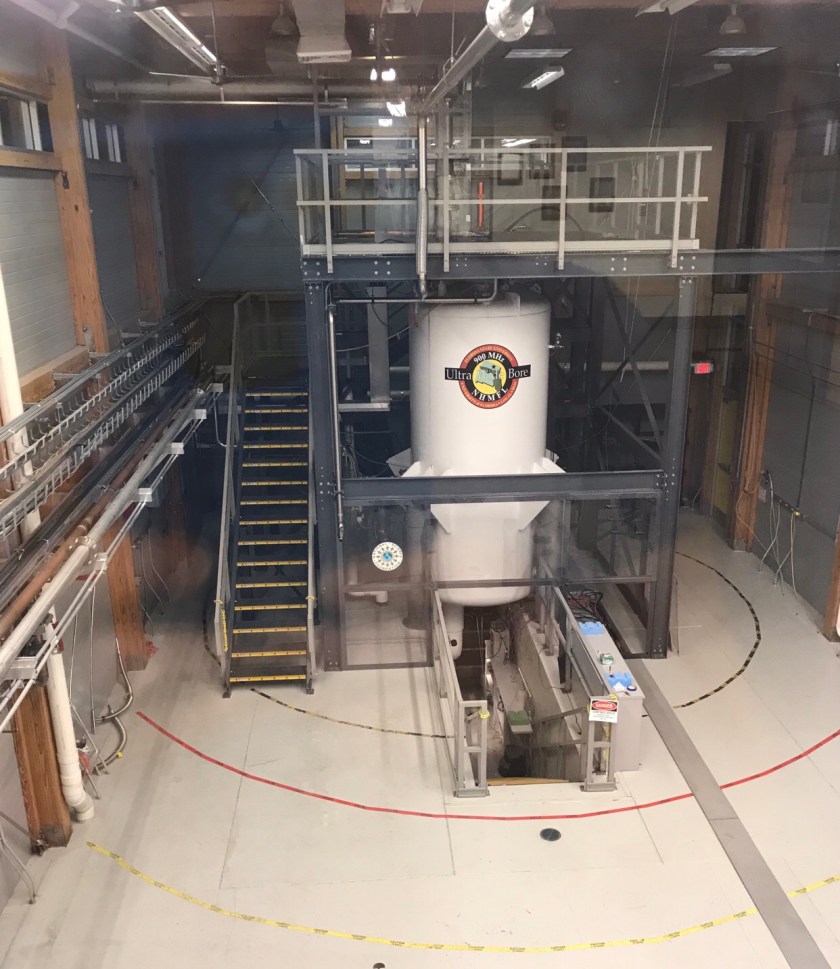
Below is a superconductor. Cool, eh? Literally cool. The temperatures necessary to operate a superconductor are similar to what one might find on Pluto. That’s -271.3° C.
I need to take another tour. There was way too much for me to take in on this visit.
If you’re interested in reading more about the MagLab, check out the website at NationalMagLab.org. Tours are offered every Wednesday starting at 11:30.

 Praying for Eyebrowz
Leslie, here was me thinking, meh goad, she’s technical the day but actually that was very interesting and thta is some decorative piece.
LikeLiked by 1 person
I didn’t put too much tech stuff in because I was afraid I’d screw it up! Thanks for taking the time to read it.
LikeLiked by 1 person
You did abso right xxxxx
LikeLiked by 1 person
Gracias!
LikeLiked by 1 person
Very interesting, and quite lovely.
LikeLiked by 1 person
Thanks!
LikeLike
Wow, what a great place. I’m going to add it to my (long) list. Great pictures… many thanks. – Marty
LikeLiked by 1 person
For sure!
LikeLike
Your camera smuggled well
LikeLiked by 1 person
I’m practicing for my career in espionage.
LikeLiked by 2 people
🙂
LikeLiked by 1 person
Great tour, thanks!
LikeLiked by 1 person
Thank you!
LikeLiked by 1 person